So the legendary Joss Whedon screenplay for Wonder Woman has been leaked online, so I'm blatantly using this as an excuse to dredge up my old Wonder Woman movie pitch I wrote on June 9, 2009.
---
A while ago, Rich Lovatt wondered whether we hadn't dodged a bullet in not getting a Wonder Woman movie. This week, Graeme McMillan over at io9 asked why Wonder Woman gets no love. Rich answered this first by saying what nobody is ever willing to admit about Wonder Woman, she's the world's most famous superheroine by virtue of seniority, rather than her actually being a great character.
Wonder Woman's origin is goofy, her powers are all over the map, and she doesn't have any great mission other than being a "warrior for peace," which is such a paradox it became a punchline -- from Batman, no less -- in Mark Waid's seminal Kingdom Come.
Batman, by the way, is the elephant in the room during this whole "Why can't we get a decent Wonder Woman?" movie conversation. Dark Knight blew the doors off the box office last summer, and in some measure legitimized superhero movies, largely on the basis of its dark, timely, political tones and Heath Ledger's post-humous Oscar buzz.
Thus, the world is primed for a high-profile, serious, major studio production of Wonder Woman. But, as McMillan pointed out in an earlier post, just because Wonder Woman is popular doesn't mean making a good Wonder Woman film will be easy. Nick Nadel over at Sci-Fi Scanner has 5 tips for making an awesome Wonder Woman movie, and I agree with four of them. Sorry Nick, but I'm keeping the Invisible Jet.
Okay, so enough stalling, what's my take on Wonder Woman?
George Lucas has gone slowly mad with power and is more than willing to overmilk the franchise simply for the sake of earning a few extra billion dollars. Thus, can you really say Darth Georgy wouldn't agree to a complete reboot of the franchise, especially if it meant he could foist some new and expensive cinema tech into the market?
If, by some miracle, Lucas did greenlight a remake/restart/resurrection of Star Wars, we'd have to cast our favorite New Hope roles with contemporary thespians, ones that would breathe new life into the roles, conform to the demands of the modern marketplace (be affordable for a three picture deal and be willing to get tied to the role; think Zachary Quinto for the new Spock), and also not totally suck (looking at you, Hayden Christensen).
So here we go:
Luke Skywalker: Untapped potential is the key theme here, as all Luke needed was a little confidence and some opportunity to leave the farm behind. Plus, we now know going in that he's Darth Vader's kid, so there should be a little more obvious strength here than before. I go with Michael Terry, best known as intern Wendell Bray from Bones. He can do the lacking-in-confidence farmboy pretty well, but we've seen him man up and be a bit intimidating where necessary. Plus, he's a recognizable face that isn't typecast or priced beyond reason yet. You can build a franchise around this guy.
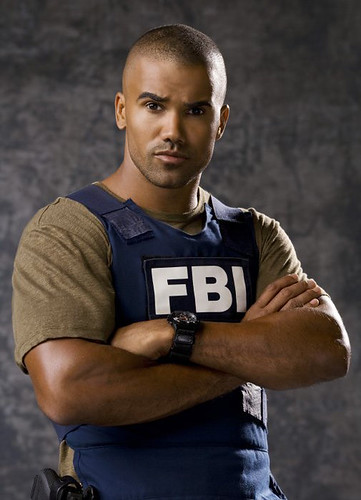
Han Solo: The definition of charming rogue, you need someone who can pull off smarmy but capable, to the point you'll buy him as a general two movies later. Hugh Jackman is the obvious choice here, but you could never afford him. Nathan Fillion could be had for a decent price, but he's done this role (only better) as Mal Reynolds from Firefly. My choice? Shemar Moore from Criminal Minds. Don't let his stint on the horrendous Birds of Prey or Soul Train fool you, this dude is charming as all get-out but can do intense when the scene calls for it. And, yes, I think a black dude can play Han, no problem. In a galaxy filled with various alien races, it's entirely possible to have at least one human lead that isn't a white guy.
Princess Leia: Again, we've got Vader's strength at work here, in someone who is already a leader (rebel spy, Senator, royalty) at a very young age. We have to believe she could kick your ass, despite being a freshman in college. Me, I go with Emma Stone. Yes, she played the amazingly cool chubby-chaser in Superbad, and did time in The House Bunny, but here we have the height, the authoritative voice, the stare-you-down eyes and the on-screen gravitas to not be reduced to damsel in distress.
Obi-Wan Kenobi: You need charming, wisened, but someone who clearly could have been a soldier at one point. When he breaks bad, you need to believe it. And since this is a part that won't survive the first film, but will have cameos in most others, you can splurge a bit here on casting cost. The answer is House's Hugh Laurie, who is primed to remind the world that he isn't a misanthropic MD, but actually a charming Brit funnyman (Black Adder, anyone?). He could play the mentor figure with the appropriate avuncular strength, then break out the Greg House menace when the lightsaber is unsheathed. Also, his real Brit accent is enough of a separator from his signature role that folks won't so easily think "Why does House have a lightsaber?" when they see it.
Darth Vader: The guy in the suit, sad to say, really doesn't matter. This is a role that's all about voice, and the next-gen James Earl Jones I'd call up is Christopher Judge. Yes, you know him best as Teal'c from Stargate SG-1 but he was also the menacing voice of Magneto from X-men: Evolution, and that alone is evidence his got the voice chops for this role.
C-3PO: The man in the suit shouldn't even be a man, as I'd argue we need an all CGI Threepio akin to the androids from I, Robot (and, yes, that's all I'd crib from that trainwreck). Thus, this comes down to voice, and what you need here is a voice actor that can do mincing, officious, and snide without alienating the audience (this is harder than it seems). Alexis Denisoff, whom fans will remember fondly as Wesley from Buffy and Angel, can bring a great deal to the role, not the least of which is a sense that someone would actually use Threepio as a competent ambassadorial aide.
R2-D2: Nobody would play Artoo, because everybody would play Artoo. As John Scalzi once snarked, building androids that can't speak in an age of cheap, ubiquitous AI is just stupid. Thus, if Artoo can't talk, he can't talk -- period. Speaking binary is a lame copout for showcasing Ben Burtt's comedic audio effects. Clearly Artoo has a holo-emitter and external speaker -- and he's obviously quite clever -- so I'd have Artoo's lines hacked together from clips he's recorded of everyone else, like a less lame version of Bumblebee's radio-speak from Transformers. This make's Artoo's lines a treasure trove of Easter eggs, as obviously he'd have years of voiceclips to choose from, and we could sneak in some nods to previous versions of the Star Wars universe -- and other fanwanks -- thoughout his speech. And there's as much obvious but unforced comedic potential in this speech device than his chirps and twitters ever promised.
Chewbacca: So long as the dude is seven feet tall and comfy in the Wookiee suit, it doesn't matter. Therefore we give this part to Shaq.
Despite some rather glaring plot holes, I very much enjoyed the Trek reboot and have seen it twice. A sequel has already been greenlit, and the good folks at SFSignal wasted no time asking what the first Trek reboot sequel should be about. Here's what I suggest. What I'd really like to see (barring the possibility of an ongoing TV series with the current cast) is an actual, ethical/moral dilemma, which is what Trek has always been about. Moreover, I think you can get that done based on what happened in this film. [SPOILERS] We know that the Federation has lost a founding member in Vulcan, that Starfleet has basically lost an entire Academy class and a half-dozen ships to Nero, and that the Klingons lost an entire fleet to the rogue Romulan. Everyone in the galaxy knows that A) there's something called Red Matter that can make black holes, which is every bit as dangerous as the Genesis Device ever hoped to be, and B) that in a little over a century, Romulus is going to get obliterated by a supernova. Basically, Romulus has the motive and the opportunity to finish what Nero started and take out both the Klingons and the Federation. They don't have the luxury of waiting this out, both because someone else might develop Red Matter before they do, and because unless they have an invincible position in 129 years they'll be at the impotent mercy of their enemies. You could do a great non-proliferation allegory as the Enterprise has to forestall all-out war with the Romulans and Klingons and prevent anyone or everyone from getting their hands on Red Matter, possibly by kidnapping Spock (who, one assumes, can make it if his future self figured out how) or tracking down the new, presumably hidden Vulcan survivor colony where future Spock is hanging out. You can some of those great Kirk/Spock/McCoy ethical debates about whether what the Romulans are doing is moral, whether now would be a good time for a preemptive strike against the weakened Klingons (and if such a thing is ethically defensible), if the Federation should compel future and/or present Spock to create Red Matter as a deterrent--all while enjoying some great space battles and chase scenes as the Enterprise stands alone between the entire Romulan Empire, a bloodied and enraged Klingon Empire, and all-out, galaxy-consuming war. Just my wish list, anyway.
Batman Begins was about fear. The Dark Knight was about corruption. The third Chris Nolan Batfilm should be about truth. I'll lay out me reasons in a moment but first know that this whole pitch is filled with DK spoilers. You've been warned.
Let me preface by saying I greatly admire the moral complexity and gritty realism of Nolan's Batfilms, especially Dark Knight. I feel the most important tenet of DK was its concession that district attorney Harvey Dent was a more vital, inspirational, effective and -- above all -- pure hero than Batman could ever be. Vigilantes are by definition criminals, and asking a criminal to save us from crime is itself a form of corruption. Batman is a necessary evil.
The Dark Knight ends unsatisfactorily for many people because Batman sabotages his own symbolism in the end. He takes the fall for Two Face's crimes, to preserve the image of Harvey Dent. According to Batman, the symbol of Dent is more important than the truth of Dent. Thus, it is Batman who takes the fall as a savage, murderous vigilante who killed the corrupt cops that betrayed Dent. He's now an even more terrifying bogeyman for the criminals of the city, but also a less potent symbol for its innocent citizens. His guilt is also untrue, and protecting Gothamites from the truth is a patronizing, pandering form of salvation. They deserve better, and so does Batman. That's why Batfilm 3 should be about truth.
It's also why the signature villain of Batfilm 3 should be the Riddler.
Setting: Gotham, brighter than before, with a glitz and glamor creeping back, but it's a false sheen. The Batman is a murderer, and it has made the people distrusting of symbols, yet still in love with them. Case in point, the new celebrity gangster, Oswald "The Penguin" Cobblepot -- yes, I said The Penguin -- an eccentric, glamorous, dapper "Teflon Don"-style mafioso who has taken majority control of Gotham City's underworld and taunted Commissioner Gordon for being unable to stop him. A Harvard-educated trust fund baby, he bridges the worlds of every elite: criminal, businessman, entertainer and politician. He is glorified corruption lovingly re-embraced by Gotham. The opening of his new Iceberg nightclub is the social event of the season.
Batman, naturally, crashes the party. Batman's intent is to reinstill fear in The Penguin, to let him know that his money and his fame can't protect him. It backfires. Cobblepot is the legitimate businessman -- so far as anyone can prove -- and Batman is the outlaw. Gordon and his men are forced to protect the Penguin and pursue the Dark Knight.
Batman's very public reappearance -- and his impotence in the face of the Penguin -- is the news event of the year in Gotham...until the first riddle arrives at the every newspaper and TV station in town. It's from a blogger known only as The Riddler, and within the cute mindteaser is evidence of The Penguin's guilt. The Riddler, presumably a hacker, has pierced Cobblepot's vaunted security and business acumen and nailed him. Gordon gladly brings The Penguin down -- he puts up a token fight, including taking a potshot at Gordon with a ridiculous umbrella gun from a collection of KGB artifacts that is laughably ineffective -- and the city has a new hero. Welcome the Riddler.
(For what it's worth, RiddleMeThis.Net will be a TMZ-style Gotham gossip and inside info blog, complete with all the over-the-top campy question mark motifs and green-and-purple color scheme. It sidesteps the need for a stupid Riddler costume and lends itself to a great alternate reality game for promotional purposes. Also, I'd go out of my way NOT to reveal who had been cast to play the Riddler, hinting at several Hollywood heavyweights but doing my best to set up the big reveal onscreen. That's promotional gold.)
The mayor is the next to fall, undone by The Riddler's exposes. The town is desperate to know his real identity, as is Batman. As Batman attempts to hack into his blog, the Riddler hacks back -- and let's Bruce know he's aware of the double identity. Not to worry, The Riddler is a fan. He believes in truth, in exposing secrets, in solving riddles. Everyone has secrets and masks, and uses them to hide their real darkness, but Batman is different. Batman uses untruth for good. Bruce Wayne pretends to be less than he is -- an idiot, rather than a savior. Batman does too: a murderer, rather than a protector. Batman has nothing to fear from the Riddler, who wants to see justice done as well.
The Riddler himself is a riddle. He is the symbol Batman wanted to be, but one of intellect instead of brawn. Until now, Nolan has displayed Batman as an urban commando rather than a vigilante detective. Perhaps the Riddler is a better hero than Batman, untouchable and incorruptible, and not vulnerable to the same frailties as himself...or Harvey Dent.
Then the Penguin turns up dead. Then the mayor. And the Riddler confides in Batman that he is responsible. Now Batman has to find a defeat an enemy that he can't beat into submission. One that is beloved by Gotham while he is feared and distrusted. Who has the technology to do what the Riddler does - -see into every space and know every secret? Why, Bruce Wayne, as we saw in Dark Knight. Who could possibly know that Bruce Wayne is Batman? Lucius Fox? Alfred? Ra's Al Ghul, Two Face, or even Rachel Dawes, back from the dead? Batman is truly alone, unable to trust anyone, and his past actions have made sure no one will trust him.
Batman will have no choice but to defeat the Riddler by facing his own mistakes and his own failures -- eliminating everyone he's ever known as a suspect. He'll have to win back the hearts and minds of Gotham in order to flush the Riddler out, to make the city see that this unknown character can't be trusted, and force the narcissist Riddler into the open to re-earn their love.
Imagine that, a mystery movie involving Batman. In fact, I'd probably call it that: Batman: Detective. I'd pay to see that.
---
Side notes:
The current comic book incarnations of the Riddler are about as far from the Frank Gorshin/Jim Carrey goofball image as you can get. In the (overrated) Hush storyline, the Riddler famously deduced that Bruce Wayne is Batman, and tormented the Caped Crusader with that knowledge. He then disavowed his villainous ways and became a detective for hire. In both cases he is a measured, controlled individual. The new film Riddler should combine these factors to terrifying symbolic effect.
Also, if the studio is making you ramp up the villain count but you don't want to revisit any of the bad guys you've already shown, I could work in a spot for Catwoman. Play her as a Robin Hood-esque celebrity cat burglar who robs from the rich and gives to the poor...mistreated animals, children, and such. She's Batman but skewed, a vigilante who preys on the wealthy to "right society's wrongs" rather than fighting the violently criminal. Her definition of evil is different. The city will love her too, but Batman will take her into confidence, trying to fill the void left by Rachel. They're both outlaws, and she can tempt him into being happy with that. Then, when the Riddler makes known that he knows who Batman is, he'll assume it's Catwoman that sold him out. Loyalties will shift. Women will be scorned. Drama will be amped. Also, the new Catwoman suit will be completely obscuring with a gas-mask, and she'll openly remind Bruce of Rachel, to the point he suspects her of being Rachel. Use Maggie Gyllenhal in flashbacks if you want. It would be a total mindjob. It also amps up the reveal of who Selena Kyle really is.
You could drop in enough winks and nods to the comics that even the fanboys would love this story line. Chris Nolan, David Goyer, I await your phone call.